Monopoly Roll RTP, Payout Odds, and Bonus Features: How the Monopoly Roll Casino Game Works
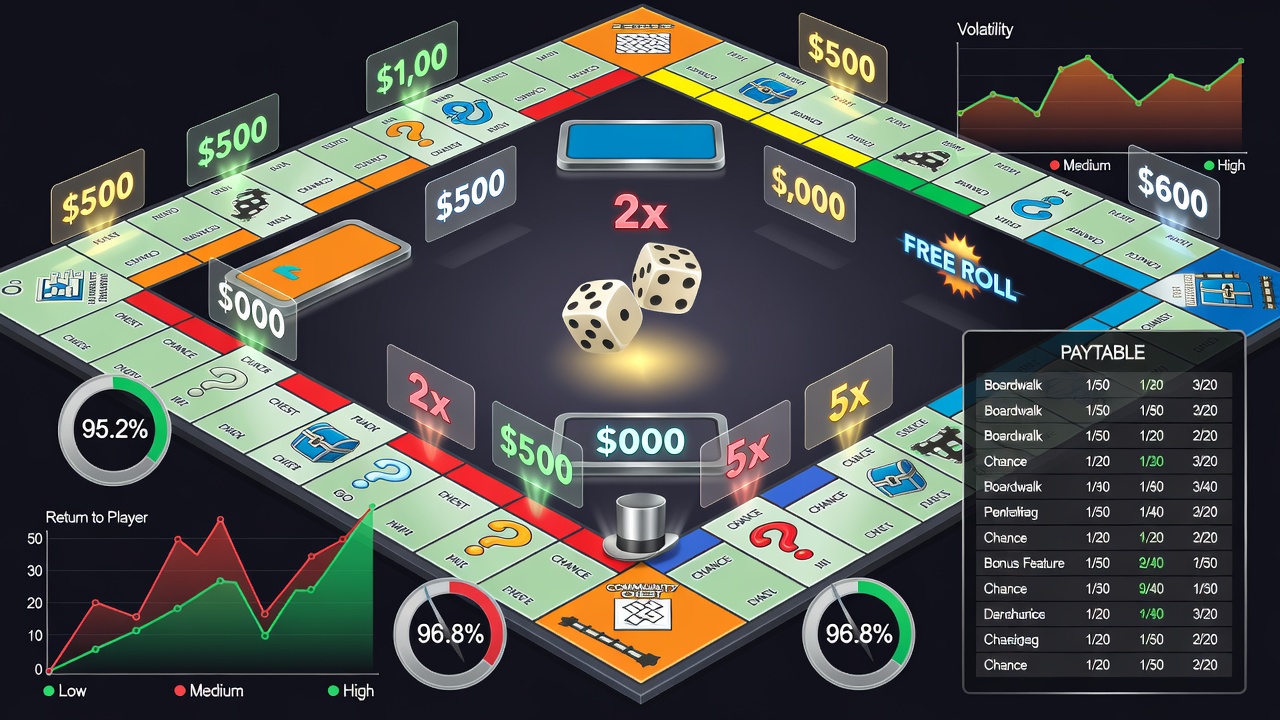
A single percentage point in return-to-player calculations can mean the difference between a game that quietly drains your bankroll and one that gives you a fighting chance over thousands of spins. That single figure - the RTP - is often the first thing seasoned players check before committing real money, yet most casual players never look past the flashy graphics and familiar branding. The Monopoly Roll casino game trades on nostalgia, borrowing the dice-rolling mechanics and property-trading spirit of the classic board game, but underneath that recognizable theme sits a set of mathematical rules that determine exactly how much you can expect to win or lose over time.
Understanding those rules changes how you play. Once you know how the payout structure is built, the bonus rounds stop feeling like random surprises and start looking like calculated features designed to extend gameplay and shape volatility. Before testing any real-money session, it helps to check the current figures for monopoly roll em rtp directly through the operator's game information panel, since providers occasionally adjust math models between releases. This piece breaks down the mechanics layer by layer - RTP, payout odds, bonus triggers, and practical strategy - so you can approach the tables with a clear picture of what you're actually wagering against.
What follows isn't a promise of guaranteed wins. It's a technical map of how the game behaves, built from the same principles that govern every regulated slot and dice-based casino title, applied specifically to the Monopoly-branded release that has become a fixture on many gaming platforms.
What Is the Monopoly Roll Game and How Does It Differ From Traditional Slots?
The monopoly roll game occupies a hybrid space between a traditional slot machine and a dice-based table game. Rather than spinning reels lined with symbols, players trigger a virtual dice roll that determines movement across a stylized board reminiscent of the original Monopoly layout. Landing on specific tiles activates cash prizes, multipliers, or entry into bonus sequences. This structural difference matters because dice-based mechanics generally produce a different probability curve than reel-based slots - outcomes cluster around expected values more predictably, since two or more dice rolled together follow a bell-shaped distribution rather than the flatter randomness of independent reel symbols.
Core Mechanics and Board Layout
The board typically mirrors familiar Monopoly properties, with color-coded groups, railroad spaces, and chance-style tiles repurposed as bonus triggers. Each roll advances a token, and the tile landed on determines the payout event. Some tiles pay flat cash amounts, others apply multipliers to the current stake, and certain spaces unlock free rolls or feature rounds.
How It Compares to Classic Slot Titles
Classic slots rely on paylines and symbol combinations; the monopoly roll casino game instead rewards positional outcomes on a virtual board. This means volatility is often driven more by tile placement and roll frequency than by symbol rarity, giving the game a distinct rhythm compared to five-reel video slots.
Why the Theme Appeals to a Broad Player Base
Brand recognition plays a real role here. Players who grew up with the board game bring built-in familiarity with concepts like passing Go, collecting rent, or landing in jail - translating that emotional familiarity into curiosity about the digital payout mechanics.
Breaking Down Monopoly Roll RTP: What the Numbers Actually Mean
Monopoly roll RTP refers to the theoretical percentage of all wagered money the game returns to players over a long statistical run - typically calculated across millions of simulated spins or rolls. An RTP figure in the mid-to-high 90s percent range is standard across most licensed dice and slot titles in this category, though the exact number varies by operator and regional licensing requirements.
How RTP Is Calculated for Dice-Based Games
Unlike reel slots, where RTP derives from symbol weighting tables, dice-based games calculate RTP from the probability distribution of roll outcomes combined with the payout value assigned to each board tile. Developers run extensive simulations to confirm the long-term return matches the published figure before certification.
Theoretical RTP vs. Real Session Results
A published RTP applies to millions of rolls, not to a single session. A player might sit through fifty rolls with far worse or far better results than the stated percentage suggests - variance is the reason short-term results rarely mirror long-term math.
Why RTP Alone Doesn't Tell the Whole Story
Two games can share an identical RTP yet feel completely different to play. Volatility - how often and how large payouts occur - shapes the actual player experience far more than the headline RTP figure alone.
- Low volatility: frequent small wins, smoother bankroll curve
- High volatility: rarer but larger payouts, sharper swings
- Medium volatility: a blend most Monopoly-themed titles tend to target
Understanding Monopoly Roll Payout Odds Tile by Tile
Monopoly roll payout odds vary significantly depending on which tile a token lands on. Property tiles generally offer modest fixed payouts, railroad spaces often carry slightly higher multipliers, and specialty tiles like Chance or Community Chest equivalents can trigger disproportionately large rewards relative to their landing frequency.
Fixed Payout Tiles vs. Multiplier Tiles
Fixed payout tiles return a set cash amount regardless of stake size beyond a baseline multiplier, while multiplier tiles scale directly with the player's current bet - meaning higher stakes amplify the reward on these specific spaces.
Odds of Landing on High-Value Spaces
Because dice rolls follow a probability curve rather than uniform randomness, tiles positioned at common roll totals (like those reachable by a combined roll of seven) get landed on more often than tiles requiring rarer roll combinations. Game designers account for this by adjusting payout size inversely to landing frequency - rarer tiles pay more, common tiles pay less.
Reading the Paytable Correctly
Every regulated release publishes a paytable showing exact payout values per tile type. Cross-referencing this table against the stated RTP gives a clearer sense of where the real value sits on the board, rather than relying on assumptions about which tiles "look" more rewarding.
Exploring Monopoly Roll Bonus Features in Detail
The monopoly roll bonus features are what separate a single dice roll from an extended, layered gaming session. These features typically activate when a token lands on a designated bonus tile, triggering anything from free additional rolls to a separate mini-game screen.
Free Roll Rounds and Multiplier Boosts
Landing on a bonus-marked space frequently grants extra rolls without additional wagers, sometimes paired with a temporary multiplier that inflates payouts for the duration of the bonus sequence.
Property Ownership and Rent Collection Mechanics
Some versions incorporate a simplified ownership system, where landing on the same property tile repeatedly across a session builds toward a collection bonus, echoing the rent-collection logic of the physical board game.
Jail, Chance, and Special Event Tiles
Jail-style tiles can pause progress or offer a "get out" bonus opportunity, while Chance-equivalent spaces introduce randomized rewards outside the standard payout table - these tend to carry the widest payout range on the entire board.
How the Monopoly Roll Casino Game Fits Into the Broader Casino Landscape
Positioned alongside traditional slots and table games, the monopoly roll casino game appeals to players seeking something between the passive spin-and-wait format of slots and the strategic engagement of table games. Its board-based structure gives players a visual sense of progress that reel slots don't naturally provide.
Licensing and Fairness Standards
Reputable operators certify their RTP and payout structures through independent testing labs, ensuring the published figures reflect the actual game engine rather than marketing estimates. Checking for this certification before playing is a practical safeguard.
Mobile vs. Desktop Play Experience
The board layout and dice animation render well on both formats, though mobile play often speeds up the roll cadence, which can subtly increase the pace of bankroll turnover during a session.
Practical Strategy: Playing Monopoly Roll With the Odds in Mind
No strategy overrides the built-in house edge, but informed play still improves the overall experience and reduces unnecessary losses.
Bankroll Management Around Volatility
Setting a session limit before playing, and sticking to it regardless of short-term swings, protects against the natural variance inherent in dice-based payout structures.
When to Chase Bonus Tiles vs. Play Conservatively
Players comfortable with higher variance might adjust stake size upward when approaching known bonus-heavy sections of the board, while more conservative players may prefer flat betting throughout regardless of tile proximity.
Reading Session Data to Spot Personal Patterns
Tracking wins, losses, and bonus frequency across multiple sessions - rather than judging the game off a single sitting - gives a far more accurate personal sense of how the published RTP plays out in practice.
Frequently Asked Questions
Is Monopoly Roll better for beginners or experienced players?
The game's straightforward dice-and-board mechanic makes it accessible to beginners, while the layered bonus features and payout variance give experienced players enough depth to apply bankroll and volatility strategies. It suits a wide skill range because the core rules stay simple even as the payout math grows more nuanced underneath.
Does a higher RTP guarantee more frequent wins?
No. RTP measures long-term theoretical return across millions of rolls, not the frequency of individual wins in a short session. A high-RTP game can still produce a losing streak, just as a lower-RTP title can occasionally deliver a hot run.
Are bonus tiles randomly placed each session?
Bonus tile positions are fixed within the board layout for a given game version, but which tile a player lands on depends on the randomized dice outcome each roll. The board structure stays constant; the path across it does not.
Can I verify the payout odds myself before playing?
Most licensed platforms display an in-game paytable or information panel listing exact payout values and odds per tile. Reviewing this before committing real money gives a clearer picture than relying on general assumptions about the theme.
Why do some Monopoly-themed games have different RTP values?
Different developers and operators build their own math models, adjusting tile payouts, dice probabilities, and bonus frequency to hit a target RTP within regulatory limits. Even games sharing the same theme can carry meaningfully different figures.
Does stake size affect the underlying odds?
Stake size changes the dollar value of payouts but does not alter the underlying probability of landing on any given tile. The house edge and RTP percentage remain constant regardless of how much a player wagers per roll.