How to Create, Verify, Secure, and Manage an Online Casino Account: Login, Mobile Access, Password Reset, Safety, and Closure Guide
Ninety seconds. That is roughly how long it takes to fill out a standard registration form on a licensed gaming platform, yet the decisions made in those ninety seconds shape how safely a person gambles for months or years afterward. A weak password, a skipped verification step, or an ignored security prompt can turn a casual pastime into a genuine liability. Most players never think about account architecture until something goes wrong - a locked login, a stalled withdrawal, a forgotten password at the worst possible moment.
Setting up an account correctly the first time saves hours of frustration later. Anyone comparing platforms will notice that the registration flow for an artemisbet casino account follows a pattern common across the regulated gaming industry: identity fields, contact verification, and a security checkpoint before real-money play begins. That pattern exists for a reason, and understanding it turns a first-time user into someone who manages their account with confidence rather than guesswork.
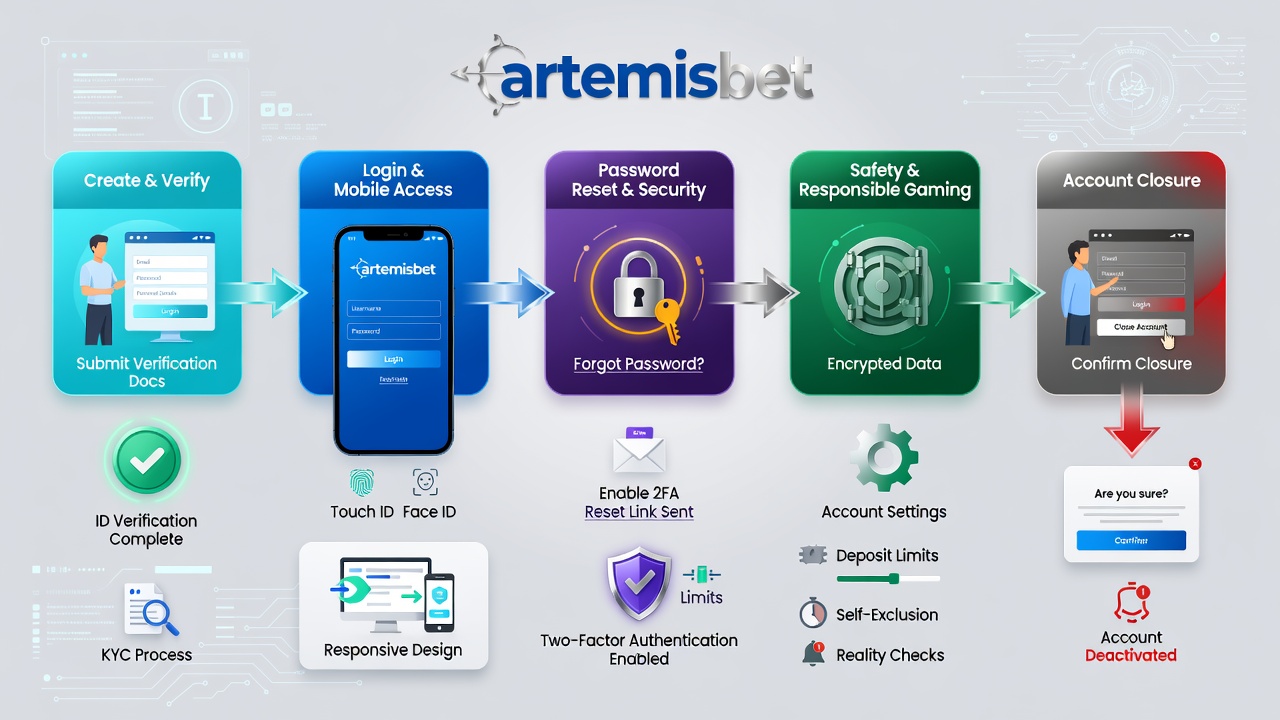
This guide walks through the entire lifecycle of a gaming account - from the first registration screen to the final closure request - with attention to the details that actually matter: what documents you will be asked to provide, how mobile access changes daily habits, what real security looks like beyond a checkbox, and how to tell whether a platform deserves your trust in the first place.
Getting Started: Creating Your Account
What You Need Before You Begin
Before learning how to create an online casino account, gather a few essentials: a valid email address you check regularly, a mobile number for verification codes, and basic personal details that match your government-issued identification exactly. Mismatched names or outdated addresses are the most common reason registrations stall partway through. Having a payment method ready - a debit card or e-wallet - also speeds up the process, since many platforms ask for at least partial payment details during setup rather than afterward.
Step-by-Step Registration Process
Knowing how to register for an entertainment platform means understanding the sequence rather than just the fields. Most sign-up forms follow this order:
- Enter your email and create a username that is not reused from another sensitive account.
- Set an initial password (you will likely strengthen this later).
- Provide your full legal name, date of birth, and residential address.
- Confirm your mobile number via a one-time code sent by SMS.
- Accept the terms of service and confirm you meet the minimum legal age for gambling in your jurisdiction.
Skipping ahead or entering placeholder information - a common shortcut people try when they want to "just look around" first - almost always backfires during verification, since the details you submit at signup are cross-checked against the documents you provide later.
Common Registration Mistakes to Avoid
The most frequent errors are surprisingly mundane: typos in email addresses that lock users out of confirmation links, using a nickname instead of a legal name, and selecting a country that does not match the billing address on a payment card. Each of these seems trivial at the moment of entry but creates real delays once verification begins.
Verifying Your Identity
Why Verification Matters
Identity verification is not bureaucratic friction for its own sake - it is the mechanism that prevents underage gambling, blocks stolen-identity fraud, and confirms that withdrawal requests go to the rightful account owner. Platforms that skip this step, or make it suspiciously easy, are usually the ones operating without proper licensing.
What Documents Are Needed for Account Verification
What documents are needed for account verification typically falls into three categories:
- Proof of identity: a passport, national ID card, or driver's license showing your photo, full name, and date of birth.
- Proof of address: a recent utility bill, bank statement, or government correspondence dated within the last three months.
- Proof of payment method: a photo of the card used for deposits (with middle digits obscured) or a statement from the e-wallet provider.
Uploading clear, uncropped, color scans - rather than blurry phone photos taken at an angle - is the single biggest factor in getting approved on the first submission.
How Long Verification Usually Takes
Standard verification often completes within a day when documents are clear and consistent with the registration details. Complications arise when a name on a utility bill differs from the account holder's legal name, or when a submitted ID has expired. Reputable platforms will specify exactly what went wrong rather than issuing a generic rejection, which is itself a useful signal of platform quality.
Logging In and Accessing Your Account
Standard Login Procedures
Understanding how to log in to an online gaming account is straightforward once the account exists: username or email, password, and in many cases a second verification step such as an SMS code or authentication app prompt. This two-step approach has become standard practice specifically because gambling accounts are attractive targets for credential theft.
Troubleshooting Login Issues
Failed logins usually trace back to one of three causes: an expired session that needs a fresh sign-in, a temporarily locked account after repeated failed attempts, or a browser autofill error that has quietly inserted an old password. Clearing cached credentials and typing the password manually resolves the majority of these cases without needing to contact support.
Can Users Access Accounts From Mobile Devices
Can users access accounts from mobile devices is one of the most common questions among newer players, and the answer is yes across nearly every modern platform. Mobile access typically comes in two forms: a responsive website that adapts to a phone's screen, or a dedicated app available for direct download. Mobile sessions carry the same security requirements as desktop ones - the same password, the same two-factor prompts - which means switching between a phone and a laptop mid-session should feel identical rather than requiring separate credentials.
Resetting Your Password Safely
When and Why You Might Need a Reset
Forgotten passwords are inevitable, especially for accounts used infrequently or shared across a long password rotation. A reset is also the correct response the moment you suspect any unauthorized activity, even before confirming a breach has actually occurred.
Step-by-Step Password Reset Process
Learning how to reset an account password takes only a few minutes on most platforms:
- Select "Forgot Password" on the login screen.
- Enter the email or phone number linked to the account.
- Open the reset link or code sent to that contact method - links typically expire within fifteen to thirty minutes.
- Create a new password that does not reuse any of your last several passwords.
- Log in again and confirm that any linked devices show the correct new session.
Creating a Strong New Password
A strong password for a gambling account should be treated with the same seriousness as one for online banking, since real money moves through it. Combine unrelated words with numbers and symbols rather than relying on predictable substitutions like "@" for "a." Avoid reusing a password from any other financial service - credential-stuffing attacks specifically target people who repeat passwords across sites.
Securing Your Account for the Long Term
Enabling Two-Factor Authentication
Two-factor authentication is the single most effective step in how to secure an online entertainment account. Even if a password is compromised, a second code sent to your phone or generated by an authenticator app blocks most unauthorized access attempts outright.
Recognizing Phishing and Scam Attempts
Fraudulent emails mimicking casino platforms often create urgency - "your account will be suspended in 24 hours" - to pressure quick clicks. Genuine platforms never ask for your full password by email, and any link that redirects to a domain slightly different from the official one should be treated as a red flag rather than clicked out of curiosity.
Monitoring Account Activity
Reviewing login history and recent transactions on a regular basis catches suspicious activity early. Most platforms display a log of recent sessions, including device type and approximate location, which makes spotting an unfamiliar login far easier than waiting for a financial discrepancy to surface first.
Managing Your Account Settings
Updating Personal and Contact Information
Knowing how to manage account settings starts with keeping contact details current. An outdated phone number can lock you out during a two-factor prompt, and an old address can delay withdrawal verification later, so updating these fields the moment they change avoids downstream problems.
Setting Deposit Limits and Responsible Gambling Tools
Most regulated platforms allow users to set daily, weekly, or monthly deposit caps directly within account settings. These limits function as a practical safeguard rather than a punitive restriction, and adjusting them requires a cooling-off period on many platforms specifically to prevent impulsive changes during a losing streak.
Managing Notification and Privacy Preferences
Notification settings control how often you receive promotional emails or SMS alerts, while privacy preferences determine what data is shared with third-party marketing partners. Reviewing both periodically keeps your inbox relevant and limits unnecessary data exposure.
Closing Your Account When You're Done
Temporary Suspension vs. Permanent Closure
Most platforms distinguish between a temporary self-exclusion, which pauses access for a set period without deleting data, and a full closure, which permanently terminates the account. Choosing the right option matters: a self-exclusion is reversible after the cooling period, while permanent closure typically is not.
Step-by-Step Closure Process
Understanding how to close an online gaming account involves more than clicking a single button:
- Withdraw any remaining balance before initiating closure, since funds can become harder to access afterward.
- Contact customer support or use the account settings panel to submit a closure request.
- Confirm the request via email, as most platforms require this extra verification step.
- Retain confirmation correspondence in case any dispute arises later regarding data retention or residual funds.
What Happens to Your Data After Closure
Regulatory requirements in most jurisdictions require platforms to retain certain transaction records for a set number of years even after account closure, primarily for anti-fraud and tax compliance purposes. Personal marketing data, by contrast, is typically deleted or anonymized much sooner once you formally opt out.
Are Online Entertainment Platforms Safe
Licensing and Regulatory Oversight
Are online entertainment platforms safe largely comes down to licensing. A platform regulated by a recognized gaming authority undergoes regular audits of its payout systems, security infrastructure, and fairness testing for its games. Checking for a visible license number, usually displayed in the site footer, is a quick first filter before registering anywhere.
Encryption and Data Protection Standards
Legitimate platforms use encryption protocols identical to those found in online banking to protect payment data and personal information in transit. This is one reason financial details submitted during verification remain protected even when transmitted over public networks.
How to Evaluate a Platform's Trustworthiness
Beyond licensing, look for transparent terms of service, clear withdrawal timelines, and independent testing certifications for game fairness. Platforms that bury withdrawal restrictions in fine print or delay payouts without explanation warrant caution regardless of how polished their marketing appears.
Frequently Asked Questions
Do I need to verify my account before I can withdraw winnings?
Yes, nearly every regulated platform requires completed identity verification before processing any withdrawal. This protects both the player and the operator from fraud and confirms that funds go to the legitimate account holder.
What should I do if I never receive the password reset email?
Check your spam or junk folder first, since automated security emails are sometimes filtered incorrectly. If it still doesn't appear after several minutes, contact support directly, since the account may be linked to an outdated or misspelled email address.
Can I use the same account on my phone and my computer at the same time?
Yes, most platforms allow simultaneous sessions across devices, though some restrict active gameplay to one device at a time for security reasons. Logging out of unused sessions is good practice regardless of the platform's specific policy.
Is it normal for verification to be rejected the first time?
It happens more often than people expect, usually due to blurry document photos or mismatched name spellings. Resubmitting with clearer scans and information that exactly matches your registration details typically resolves the issue quickly.
Will closing my account delete my transaction history immediately?
No, financial records are usually retained for a legally mandated period even after closure for compliance and audit purposes. Only marketing and non-essential personal data are typically removed on a shorter timeline.
How often should I update my password for a gambling account?
Changing it every few months, or immediately after using it on any unfamiliar device, is a reasonable practice. Combining this habit with two-factor authentication offers stronger protection than frequent password changes alone.